AI in agriculture integrates machine learning, computer vision, edge IoT, and autonomous robotics into crop and livestock production systems to produce gains in yield, input efficiency, and supply chain integrity. Key applications include AI-powered yield forecasting; precision irrigation and variable-rate input management; autonomous field machinery; disease and pest detection; generative AI agronomist workflows; livestock biometric monitoring; and supply-chain traceability. Deployments have demonstrated yield uplifts of up to 40% and water-use reductions of 30%, according to the WEF Deep-Tech Revolution in Agriculture report.
Defining AI in agriculture
Applying machine learning, computer vision, natural language processing, and autonomous systems to production, processing, and distribution, AI in agriculture enables data-driven decisions that exceed the speed and precision of human agronomic judgment alone.

The 2026 state of adoption, BofA analysts frame as the move from digital agronomy (AI as decision support) to autonomous agronomy, where physical AI systems perceive, reason, and act in the field without human intervention. Machine learning already accounts for roughly half of the current AI-in-agriculture market. North America leads adoption with a 36% market share, but investment in physical AI infrastructure is expanding rapidly: over 70 companies now develop the data, simulation, foundation-model, and observability layers that constitute the physical AI stack.
The demand is structural, as the global food production must increase approximately 70% by 2050 relative to 2005–2007 levels, with output needing to nearly double in developing countries. At the same time, agriculture accounts for 70% of all freshwater withdrawals globally, 71% of groundwater aquifers are already depleted, and close to 90% of Earth’s topsoil is projected to be degraded by 2050.
9 high-value applications of AI in agriculture
Yield prediction and forecasting
Modern yield-forecasting models combine field-trial telemetry, satellite multispectral imagery, historical weather data, and soil carbon records to provide in-season estimates with sub-field resolution, informing procurement commitments and insurance-risk books. For enterprises running multi-country breeding pipelines, ML-based forecasting separates variety performance from environmental interference across hundreds of trial sites, accelerating trait selection cycles.
Digital-twin approaches amplify this further. The University of Florida’s virtual strawberry field — replicating every row, leaf, and berry — trained AI models that achieved 92% accuracy in fruit detection and estimated fruit diameter within 1.2 mm, sufficient for commercial grading, as WEF research documents. The same synthetic-data methodology applies to field-trial programs where real-world seasonal data is too slow or expensive to collect at the required scale.
Climate volatility makes forecasting both more critical and more difficult. In India, irregular rainfall and rising temperatures have already produced losses approaching 65% in several horticultural crops. For crop-protection enterprises maintaining MRL-compliance windows and stewardship programs, these patterns affect application-timing models and regulatory dossier assumptions, making AI-powered forecast integration into an agronomist app a compliance investment as much as a productivity one.
Precision irrigation and water management
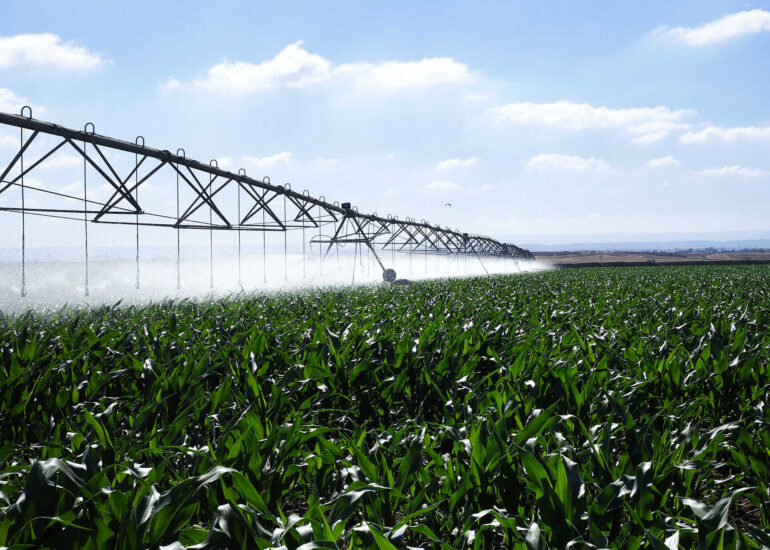
With agriculture responsible for 70% of global freshwater withdrawals and 71% of aquifers already depleted, AI-driven irrigation optimization has become a license-to-operate question for large water-intensive commodity platforms. Sensor-fusion models combining soil moisture, canopy temperature, evapotranspiration estimates, and 10-day weather forecasts reduce applied water volumes while maintaining or improving yield outcomes.
The Agripilot.ai deployment on Microsoft Azure FarmBeats produced a 30% reduction in water usage alongside a 40% increase in crop yield in climate-vulnerable sugarcane regions of India — a benchmark that positions AI irrigation as cost-saving and strategic water-risk mitigation.
Crop and soil health monitoring
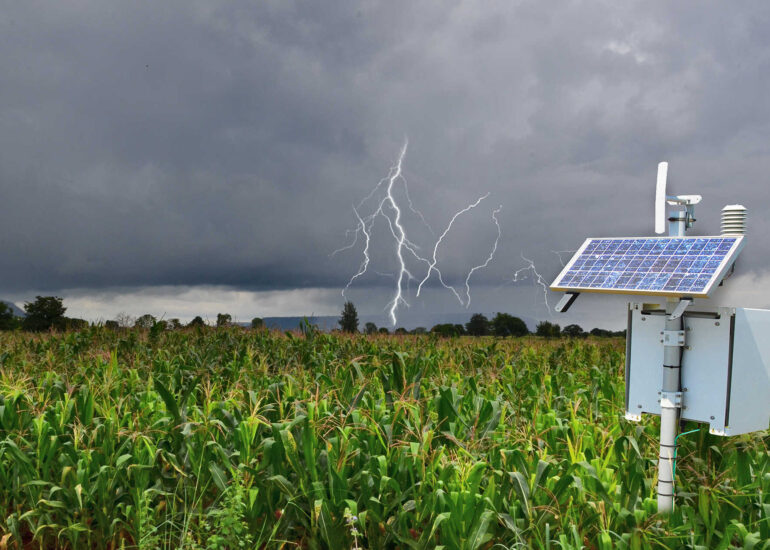
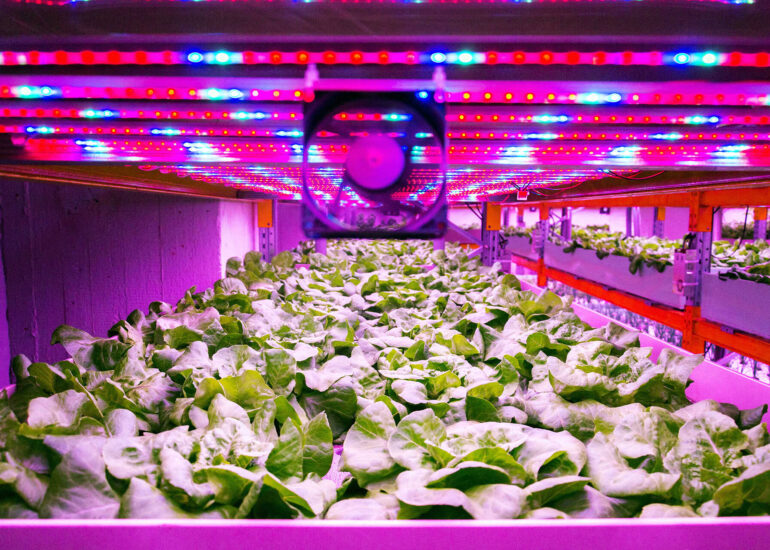
Satellite remote sensing combined with edge-IoT soil sensors enables continuous monitoring of nutrient status, compaction risk, salinity, and organic carbon across commercial-scale operations without the per-field visit cost that made traditional sampling uneconomical at enterprise scale. The same sensor logic applies to vertical and controlled-environment farming, where higher sensor density and tighter response windows make continuous monitoring even more consequential.
For agribusinesses with Scope 3 reporting obligations, satellite-based soil carbon MRV changes the economics of regenerative agriculture programs. Boomitra’s URVARA project delivered 47,311 independently verified soil carbon credits in its first 2025 issuance, covering 12,000+ smallholder farmers across approximately 20,000 hectares, with 315,735 credits projected over a 20-year program at costs far below conventional labor-intensive soil sampling, as WEF research confirms. For enterprises building farmer-facing sustainability platforms or carbon programs across emerging-market supply chains, this cost structure opens program economics that previously did not exist.
Disease and pest detection
Computer-vision models deployed on drones, fixed sensors, and smartphone cameras can identify pest pressure, fungal infection, and nutrient stress at growth-stage accuracy levels that field scouts cannot match for speed or coverage.
Agricultural fields present highly variable visual conditions across growth stages, lighting, and geographies — models trained on North American soybean imagery routinely fail on South Asian pulse crops. For crop-protection enterprises, this creates both a challenge for active-ingredient recommendation platforms and a competitive moat for those who invest in proprietary annotated image libraries across their full crop and geography portfolio.
Autonomous machinery and driverless tractors
The move from digital to autonomous agronomy is most visible in field machinery. Robotics and physical AI companies raised approximately $41 billion in 2025, and equity deals into robot foundation-model developers grew from three in 2021 to 32 in 2025 — more than a 10x increase. For OEM partners and precision-agriculture platform providers within the John Deere, AGCO, and CNH Industrial ecosystem, this investment trajectory signals that autonomous implements are moving from demonstration to commercial deployment in this product cycle.
The Infosys 5G.NATURAL program in Germany demonstrated a modular swarm system of autonomous harvesting machines using 5G connectivity for coordinated, dynamically route-adapting field operations — directly addressing the labor-scarcity challenge as the global average farmer age approaches 60. For dealer networks and service organizations, the shift to autonomous machinery requires new diagnostics infrastructure, remote-monitoring capabilities, and software-update pipelines that current field-service models were not built to support.
Generative AI for agronomist workflows
Large language models deployed as farmer-facing chatbots and internal agronomist tools are accelerating the shift from prescriptive recommendations to contextually adaptive, two-way agronomic advisory. The Agripilot.ai deployment via Azure OpenAI illustrates what production-grade generative AI looks like: IoT-sensor data, satellite imagery, and historical field records synthesized in real time into irrigation, nutrient, pest, and harvest decisions communicated through a natural-language interface.
For enterprises maintaining prescription maps at a regional or national scale, the agentic AI layer reduces the overhead of agronomist-mediated advice loops. Agentic AI is also changing compliance workflows: TraceX Technologies’ EUDR platform automates supplier onboarding, plot-level geolocation validation, deforestation risk scoring from satellite-derived data, and due diligence statement submission, with an AI web crawler monitoring EU legislative changes in real time.
The critical constraint is LLM hallucination risk in high-stakes agronomic contexts. Without domain-specific validation frameworks, the system can generate confident but incorrect recommendations with direct consequences for yield outcomes and farmer trust, as WEF analysis warns.
Livestock health monitoring
Biometric monitoring systems integrating computer vision, accelerometers, and IoT ear-tag or bolus sensors now support continuous health, reproduction, and welfare monitoring across commercial-scale livestock operations. AI models trained on continuous behavioral data can predict clinical disease onset days before visible symptoms appear, reducing antibiotic intervention costs and improving welfare compliance scores that increasingly affect retailer and processor contract terms.
For enterprises with integrated poultry, hog, or beef supply chains, the platform governance question is as consequential as model performance: who owns the animal-level telemetry data generated across a contract-farmer network, and how does it flow into a unified farm management system.
Intelligent pesticide application
Variable-rate and spot-spray systems combining real-time computer vision with prescription maps derived from satellite and drone imagery reduce herbicide volumes, protect beneficial soil microbiome populations, and cut MRL exceedance risk in regulated-market supply chains. For stewardship programs, the compliance benefit is direct: documented application records generated automatically provide the audit trail required for regulatory dossiers and retailer sustainability benchmarks, without additional data-entry burden on the grower.
WEF analysis confirms that early pest and disease detection triggered by robotics and vision systems enables precision treatments only where needed — a direct integration point between crop-protection recommendation engines and autonomous spraying platforms across OEM equipment lines.
Supply chain and traceability
AI-powered supply chain platforms are becoming essential infrastructure for EUDR compliance, Scope 3 carbon accounting, and counterparty deforestation risk management. The Trase platform demonstrates the architecture at scale: ML models connecting trade records, shipping documents, and satellite imagery to map commodity supply chains at subnational resolution for soy, palm oil, and other regulated commodities.
For enterprises operating across fragmented smallholder supply chains in high-forest-cover origin countries, AI-assisted plot-level geolocation and deforestation risk scoring at the onboarding stage is moving from best practice to legal prerequisite. The underlying data architecture must handle heterogeneous inputs — satellite, customs, certification, IoT — and maintain audit-grade version control across them.
Business case: measurable ROI of AI in agriculture
Yield uplift benchmarks. The strongest documented production outcome in recent enterprise deployments is a 40% yield increase, reported by the Agripilot.ai sugarcane program integrating IoT, satellite, and AI-powered advisory. CRISPR-accelerated breeding demonstrates upstream potential: ICAR’s DRR 100 rice variety achieved a 19% yield increase and 20% reduction in greenhouse gas emissions, while Pusa DST Rice 1 delivered yield increases of 9.66% to 30.4% in saline and alkaline soils.
Water and input cost savings. A 30% reduction in water usage and a 35% reduction in labour costs were achieved in the same Agripilot.ai deployment. Intelligent pesticide application systems reduce herbicide volumes without equivalent loss of efficacy — a direct active-ingredient cost saving that also reduces regulatory exposure from high-volume applications in sensitive geographies.
Business impact of AI-powered irrigation systems
Yield uplift benchmarks. The strongest documented production outcome in recent enterprise deployments is a 40% yield increase, reported by the Agripilot.ai sugarcane program integrating IoT, satellite, and AI-powered advisory. CRISPR-accelerated breeding demonstrates upstream potential: ICAR’s DRR 100 rice variety achieved a 19% yield increase and 20% reduction in greenhouse gas emissions, while Pusa DST Rice 1 delivered yield increases of 9.66% to 30.4% in saline and alkaline soils.
Water and input cost savings. A 30% reduction in water usage and a 35% reduction in labour costs were achieved in the same Agripilot.ai deployment. Intelligent pesticide application systems reduce herbicide volumes without equivalent loss of efficacy — a direct active-ingredient cost saving that also reduces regulatory exposure from high-volume applications in sensitive geographies.
Business impact of AI-powered irrigation systems
| Metric | Improvement |
|---|---|
| Crop yield | +40% |
| Water usage | -30% |
| Labor costs | -35% |
Sustainability and carbon outcomes. Satellite-based carbon MRV platforms have reduced the per-credit cost of verified soil carbon sufficiently to make enterprise-scale supply-chain carbon programs financially viable. The Boomitra URVARA project’s 47,311 verified credits in 2025 from 12,000+ farmers across approximately 20,000 hectares, provides a replicable template for enterprises building regenerative agriculture programs across emerging-market procurement networks.
Payback period. Payback horizons vary by application. Software-led deployments — generative AI advisory layers, supply-chain traceability, satellite monitoring subscriptions — typically reach positive ROI within 12–24 months at enterprise scale. Hardware-intensive autonomous-machinery deployments carry longer payback windows, and agri deep-tech generally requires several seasons of testing before commercial deployment, with near-zero margin for error given the direct effect on farmer livelihoods and food security.
Risks, challenges, and limitations
Data quality and labelling cost are the most consequential constraints on AI model performance in agriculture. Training data for crop-disease models, yield-prediction systems, and recommendation engines must reflect the full geographic, variety, and seasonal diversity of a commercial footprint — a requirement that generic public datasets do not meet. Generative AI models introduce an additional layer of risk: without domain-specific validation frameworks, LLM outputs in agronomic contexts can be confidently wrong, with direct consequences for yield outcomes and farmer trust.
Connectivity in rural areas constrains real-time AI inference for operations in low-connectivity geographies. Cloud-dependent architectures fail when time-sensitive decisions — irrigation triggers during heat events, spray windows ahead of rain — carry the highest value. Edge IoT architectures that process data on-device resolve latency problems but introduce interoperability and cybersecurity challenges: replicating centralised cloud security at the edge of rural networks is materially harder.
Cost of edge hardware and autonomous robotics remains prohibitive for all but the largest commercial operations. WEF characterises initial robotics deployment costs as extremely high, with ongoing software and maintenance costs compounding the barrier — particularly in low-wage, labour-abundant countries. For enterprises developing farmer-facing platforms across smallholder supply chains in Southeast Asia or sub-Saharan Africa, hardware-as-a-service and cooperative ownership models are the commercially viable pathways.
Model bias for non-Western crops and geographies is a structural limitation of the current AI-in-agriculture ecosystem. Most publicly available training datasets reflect North American and European temperate-crop systems. Computer-vision models, yield-forecasting algorithms, and pest-detection systems trained on these datasets show material performance degradation when deployed across the crop diversity and field-fragmentation patterns typical of Asian or African agriculture. For enterprises with significant revenue exposure to these markets, proprietary data programs — structured annotation pipelines, ground-truthing partnerships with national research institutes — are a strategic requirement.
Implementation roadmap: from pilot to scale
Phase 1: Data foundation
Before training any model or evaluating any vendor, enterprises need a defensible data architecture: standardised field boundaries, soil-sample repositories, historical yield records, imagery pipelines, and IoT sensor networks mapped to a common spatial reference. For organisations with multiple legacy farm management systems and heterogeneous sensor fleets across business units, this data-unification layer is the rate-limiting step. Investing in data science and big data infrastructure that can ingest, normalise, and version-control agricultural telemetry at continental scale is the prerequisite for everything that follows.
Phase 2: Targeted pilots
Select two or three high-value, measurable use cases (typically yield forecasting, smart irrigation, or supply-chain traceability) and run geographically contained pilots against explicit business KPIs: yield delta versus control fields, water volume reduction per hectare, days-to-close on regulatory reporting. The pilot stage must generate labelled datasets that will train production models, not merely demonstrate a vendor’s pre-trained system. Engaging the agronomist network as domain-annotators brings operational knowledge of specific crops and geographies that generic platforms cannot replicate.
Phase 3: Platform scale
Production deployment requires three governance layers that pilots rarely test: multi-tenant data isolation for farmer-facing platforms; model drift monitoring as seasonal and climatic conditions shift training-distribution assumptions; and regulatory alignment frameworks for jurisdictions where AI systems generate recommendations affecting MRL-sensitive applications or carbon-credit claims. For enterprises extending AI into autonomous-machinery or agentic-workflow deployments, the change-management requirement — retraining dealer service networks, updating OEM data-sharing agreements, managing farmer consent for telemetry collection — is proportionally larger than the technology build itself.
Conclusion
Ready to assess your AI agriculture readiness? Intellias works with crop-protection majors, seed companies, agri-commodity traders, and equipment OEMs to design and deliver AI programs — from data-foundation architecture to production-scale autonomous agronomy platforms. Request agritech data and analytics services